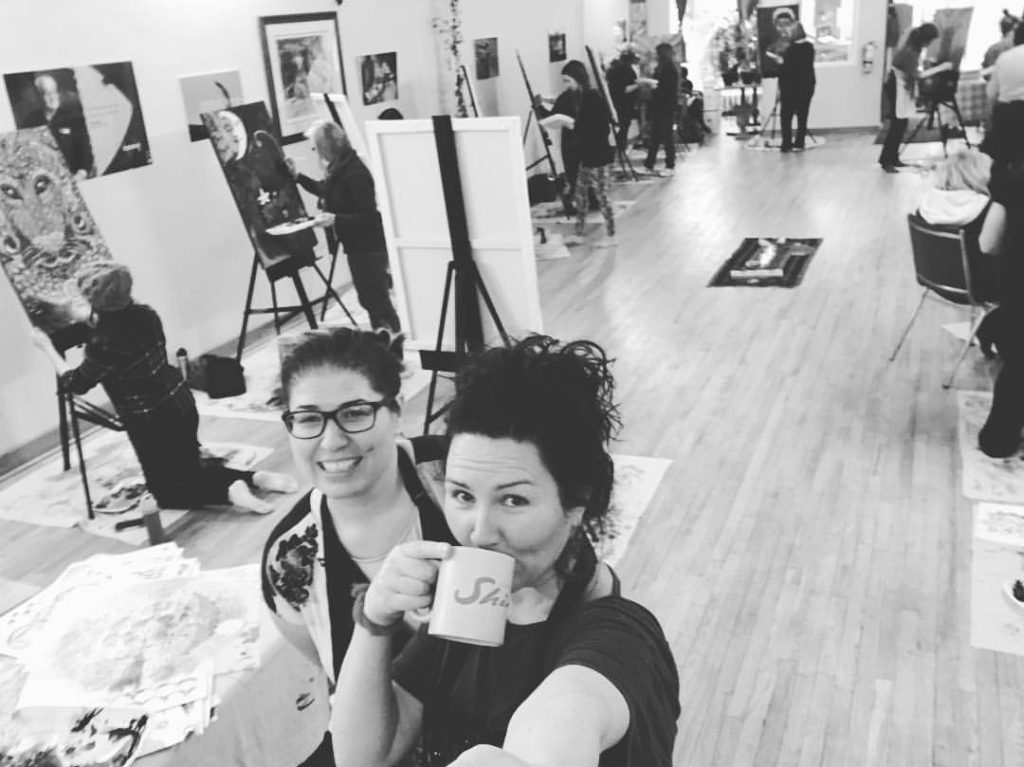
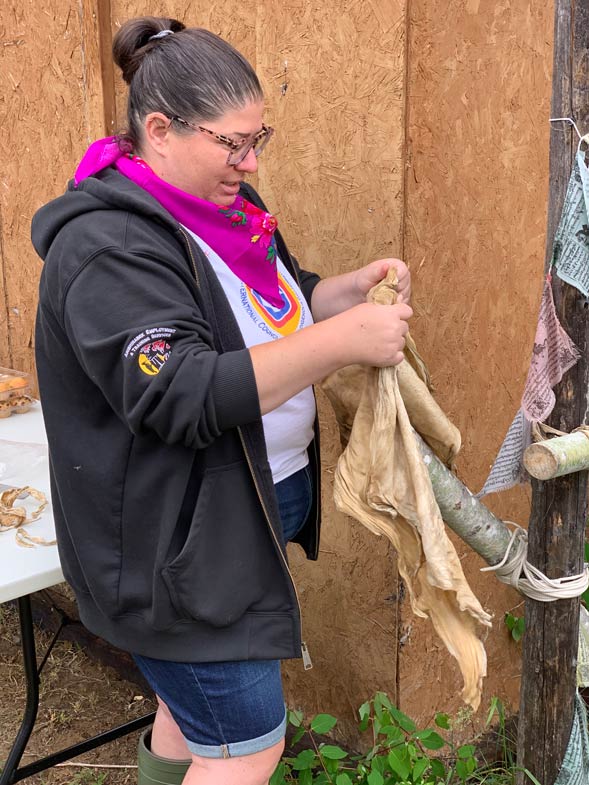
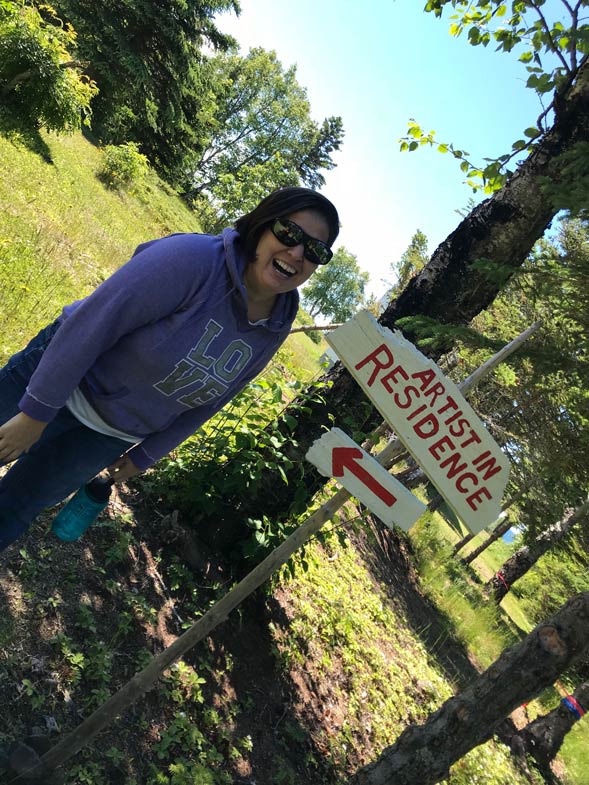
Cynthia has lived experience with intergenerational trauma and mental health challenges, and she appreciates art as a valuable tool for expressing oneself. Cynthia followed her intuition and was divinely guided to sign up for her first experience of Painting as a Spiritual Practice with her beloved teacher Angela Gollat.
Cynthia recalls receiving three emails in one week, from three different people, all directing her to attend a Painting as a Spiritual Practice course with Angela Gollat and Paula Ribotto which featured yoga and painting. This was a life changing experience for Cynthia and so her journey began.
As humans, we have a tendency to (unintentionally) take things out on the people around us, typically the people we spend the most time with; family, friends, & colleagues.
Making art is such a fundamentally human quality.An arts practice can create a safe space for us to process complex emotions and experiences that we all have. It is helpful to have space to do this processing in a way that won’t harm anyone.
Of course, not all art will be something that individuals will want to share with others. That’s ok. Making art is absolutely a vulnerable process; sharing it, even more so. You can do whatever you would like to do with your art. If you find it cathartic to do so, you can even burn it (safely).
Anishnaabe Culture
Unfortunately, she was not raised with the culture and so Cynthia began the lifelong work of (re)connecting and (re)learning at the age of 12, when her Uncle Carl taught her how to make dreamcatchers. While that was a small first step, she has now been making them for almost 30 years and can even understand some words the Elders are saying in ceremony.
In the mid-90s, she moved to Anemki-Wiikwedong (Thunder Bay, ON) with her family, much closer to their traditional territory of Opwaaganisiniing (about a 1-hour drive away), where she has found comfort in community, the land and the water, especially Ktichigaming (Lake Superior).
The Anishnaabe culture and worldview continues to open her eyes to its richness, beauty, and the practicality of it all, everyday. The Anishnaabe culture and worldview hold so much love and respect for all of our relatives. Of course, this includes all of humanity, but it also includes all the other beings; the plant and animal Nations, the two-legged, the four-legged, the winged ones, the crawling ones. Everything has a spirit. We’re all interconnected and we take only what we need. We are part of the everything.